Long-Distance Travel Fatigue Alters Market Valuations Across International Sports Tours
Written by Noah Schröder · Oct 17, 2026

Long-Distance Travel Fatigue Alters Market Valuations Across International Sports Tours
Extended travel across multiple time zones continues to influence athlete performance and subsequent contest valuations in circuits that span tennis grand slams, rugby tours, basketball leagues, and cricket test series. Observers note that players and teams often arrive with disrupted sleep patterns and reduced recovery windows, which data from performance tracking systems link directly to shifts in live betting lines.
Patterns Observed in Tennis and Rugby Circuits
Grand slam schedules place athletes on flights exceeding 20 hours between events in Australia and Europe, while rugby union tours send squads from the southern hemisphere to northern destinations within days of each other. Researchers at the Australian Institute of Sport have documented measurable drops in serve accuracy and ruck speed following such journeys, prompting bookmakers to adjust pre-match handicaps accordingly. One study released in 2025 tracked 180 professional matches and found that squads crossing more than five time zones posted win percentages 12 percent below their season averages in the opening fixture.
Basketball and Cricket Examples from Recent Seasons
NBA teams logging cross-country and transatlantic flights show similar effects, with defensive efficiency metrics declining in the first game of back-to-back road series. Cricket boards scheduling test matches in October 2026 across India, Australia, and South Africa have incorporated mandatory rest protocols after long-haul legs, yet analysts still record elevated no-ball rates and slower outfield coverage in early sessions. These measurable changes feed into real-time odds adjustments as markets incorporate fatigue indicators alongside traditional statistics.
Quantified Impacts on Live Markets
Performance databases compiled by sports analytics firms reveal consistent patterns where journey length correlates with error frequency. In one dataset covering 2024-2025 seasons, tennis players traveling over 15,000 kilometers in a three-week window converted 8 percent fewer break points than those with lighter itineraries. Rugby forwards covering comparable distances recorded 15 percent fewer successful tackles in opening halves. Bookmakers integrate these figures into models that widen or tighten spreads before matches begin, creating observable movements once lineups and recent travel histories become public.
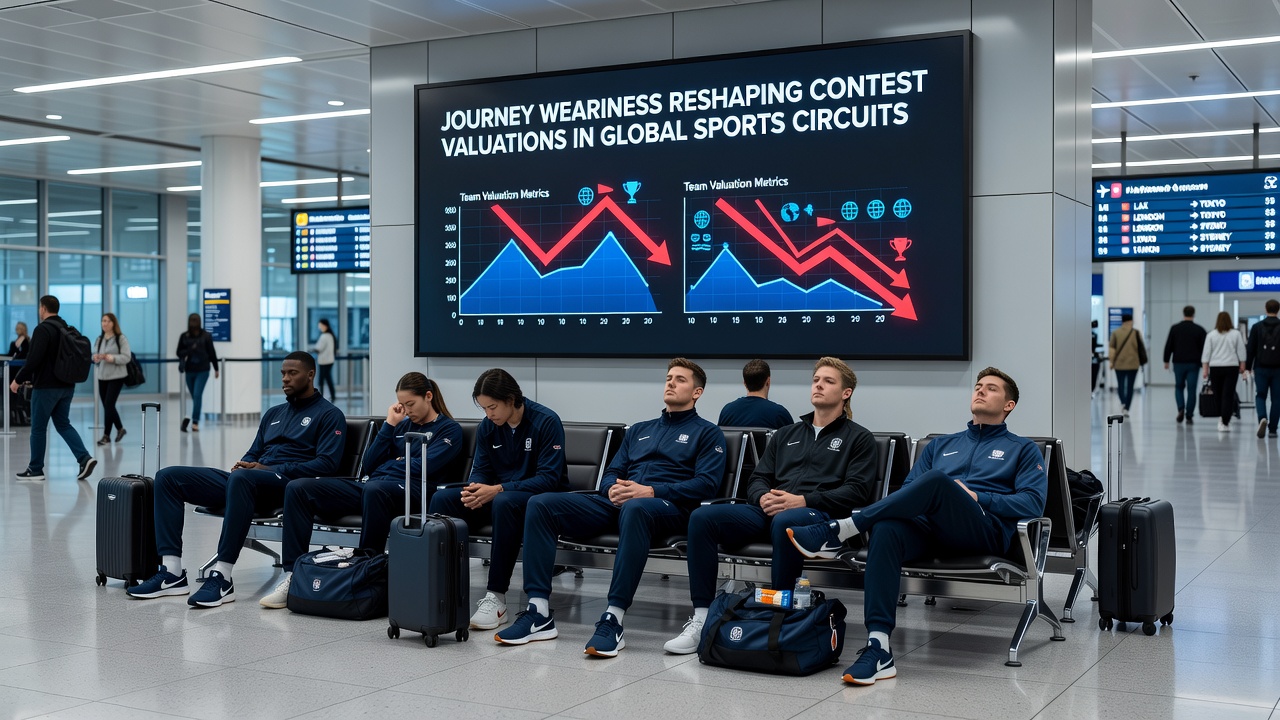
European sports medicine groups have published parallel findings. A 2025 report from the German Olympic Sports Confederation examined 320 athlete journeys and identified elevated cortisol levels persisting for 48 hours after arrival, correlating with reduced reaction times in both individual and team sports. These physiological markers appear in scouting reports that oddsmakers reference when setting initial contest valuations.
Adjustments by Organizers and Betting Operators
Tournament directors have responded with revised scheduling that inserts additional rest days on certain routes, although fixture congestion in October 2026 remains high due to overlapping World Cup qualifiers and league obligations. Betting platforms apply filters that flag recent long-haul travel as a variable, producing line movements that reflect updated probability estimates rather than public sentiment alone. Industry reports from the North American Gaming Association indicate that operators now include travel-distance metrics in proprietary algorithms alongside traditional performance data.
Regional Variations and Mitigation Strategies
Asian and Australasian circuits demonstrate the clearest effects because of greater average flight distances between venues. Teams that employ dedicated recovery specialists report narrower gaps between expected and actual results after long journeys, according to figures released by the Singapore Sports Institute. In contrast, shorter domestic routes in North American leagues produce smaller valuation shifts, though cumulative fatigue across an 82-game basketball season still registers in end-of-season models.
Coaches increasingly schedule light training sessions immediately after arrival rather than full-intensity drills, a tactic linked to faster normalization of heart-rate variability readings. These approaches appear in official team reports that markets monitor for subtle edges when setting in-play lines.
Conclusion
Travel-related fatigue now forms a documented input in valuation frameworks used across global sports circuits. Data from multiple research bodies and performance archives show measurable performance decrements that translate into adjusted contest lines, particularly when athletes cross several time zones in short succession. As schedules for late 2026 continue to evolve, tracking systems will likely incorporate additional journey metrics to refine real-time market responses.